|
Why use Exchange Traded Funds in Retirement Plan?
mall and medium-size institutional investors are increasingly utilizing exchange-traded funds (ETFs) to efficiently implement investment strategies that used to be the exclusive domain of large institutional investment funds. Exchange Traded Funds (ETFs) are some of the fastest-growing investment vehicles in the financial markets today. ETFs are diversified
like index funds, but trade like a stock. They also offer efficient, low-cost, and transparent design—combined with enormous range, flexibility,
and access to virtually every major asset class.
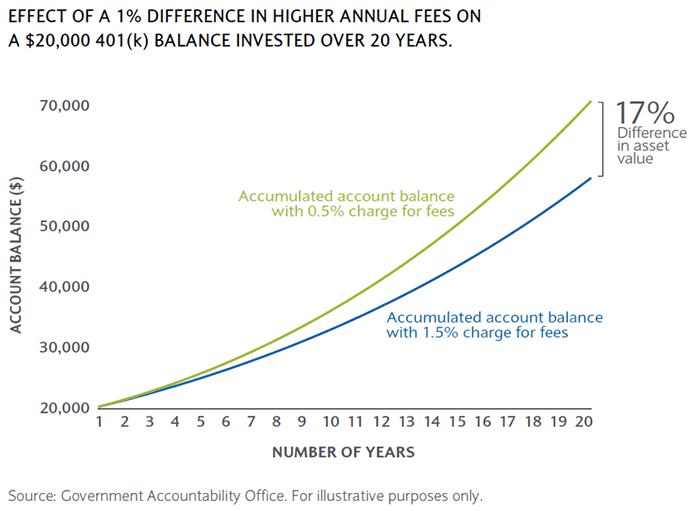
If all you did was replicate your entire portfolio with ETFs, you’d save 1% annually on expenses. What does this mean to a plan? The result of this savings through time can equal a 17% difference in asset value. Refer to the image below:
What are Exchange Traded Funds
An exchange traded fund (ETF) is an investment vehicle that combines key features of traditional mutual funds and individual stocks. Like index mutual funds, ETFs represent diversified portfolios of securities that track specific indexes. Like stocks, they can be bought on an exchange throughout the trading day. In addition to trading flexibility, key ETF benefits include instant portfolio diversification, tax efficiency, and transparency of cost and holdings.
|